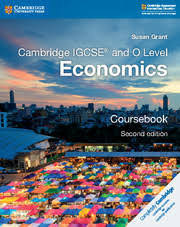
Basic Economic Concepts – Understand scarcity, choice, opportunity cost, supply and demand, and resource allocation. Market and Business Activities – Learn how markets operate, how prices are determined, and how businesses make economic decisions. National Economy – Study topics such as economic growth, inflation, unemployment, and government economic policies. International Trade – Explore globalization, trade between countries, and the benefits and challenges of global markets. Analytical and Decision-Making Skills – Develop the ability to interpret economic data, evaluate policies, and understand real-world economic issues
course introduces students to the fundamental concepts and principles that explain how economies function at local, national, and global levels. It helps learners understand how individuals, businesses, and governments make decisions about the allocation of limited resources to satisfy unlimited wants.
Students study key economic ideas such as scarcity, choice, opportunity cost, supply and demand, production, consumption, and market structures. These concepts help explain how prices are determined and how markets operate in different economic systems. The course also examines the role of businesses and governments in shaping economic activities and influencing economic outcomes.
In addition, students explore broader macroeconomic topics such as economic growth, inflation, unemployment, and government economic policies. The course also introduces international trade and globalization, helping learners understand how countries interact economically and how global trade affects national economies.
Through the study of real-world examples, economic data, and case studies, students develop analytical, evaluative, and decision-making skills. The course encourages critical thinking about economic issues and prepares learners for further study in economics, business, finance, and related fields while improving their understanding of everyday economic decisions

0 Reviews
Corporate Training