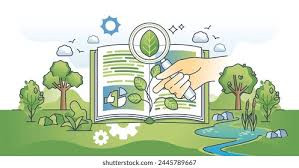
Ecosystem Understanding – Study of ecosystems, biodiversity, food chains, and ecological balance. Natural Resource Management – Focus on conservation and sustainable use of resources like water, forests, and energy. Environmental Pollution – Analysis of air, water, soil pollution and their causes, effects, and control measures. Sustainability & Climate Change – Understanding global issues like global warming, climate change, and sustainable development. Environmental Protection Practices – Emphasis on waste management (3Rs), environmental laws, and eco-friendly solutions.
A major focus of the course is on natural resources and their management. Students study renewable and non-renewable resources, including water, soil, minerals, forests, and fossil fuels. The course highlights the importance of sustainable resource use and introduces strategies for conservation and efficient management. Issues such as deforestation, overfishing, soil degradation, and water scarcity are examined in detail.
Environmental pollution is another critical area covered in the course. Students gain an understanding of different types of pollution, including air, water, soil, noise, and thermal pollution. The sources, effects, and control measures for each type are discussed, along with the impact of pollutants on human health and ecosystems. Topics such as climate change, global warming, ozone layer depletion, and acid rain are also addressed, emphasizing their causes and consequences.
The course also explores the relationship between population growth and environmental sustainability. Students analyze how increasing population levels lead to greater demand for resources, urbanization, and environmental degradation. Concepts such as carrying capacity, ecological footprint, and sustainable development are introduced to help students understand the need for balanced growth.
Waste management and sustainable practices form an important part of the curriculum. Students learn about different types of waste, including solid, hazardous, and electronic waste, and explore methods of waste reduction, recycling, and disposal. The principles of the 3Rs—Reduce, Reuse, and Recycle—are emphasized as key strategies for minimizing environmental impact.

0 Reviews
Corporate Training