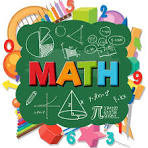
1. To acquire knowledge and understanding of the terms, symbols, concepts, principles, processes, proofs, etc. of mathematics. 2. To develop an understanding of mathematical concepts and their application to further studies in mathematics and science. 3. To develop skills to apply mathematical knowledge to solve real life problems. 4. To develop the necessary skills to work with modern technological devices such as calculators and computers in real life situations. 5. To develop drawing skills, skills of reading tables, charts and graphs.
Geometry is another essential component of the course. Students study shapes, sizes, angles, and spatial relationships. Topics such as lines, triangles, circles, and coordinate geometry enable learners to understand the properties of figures and their applications in real-life contexts like construction, design, and engineering. Trigonometry further extends this knowledge by examining the relationships between angles and sides of triangles, with applications in navigation, astronomy, and architecture.
The course also includes calculus, which focuses on change and motion. Students are introduced to limits, derivatives, and integrals, which are used to analyze functions and solve problems related to rates of change and accumulation. Calculus plays a crucial role in various scientific and engineering fields, making it an important area of study.
Statistics and probability are included to help students analyze data and make informed decisions. Learners study data collection, representation, measures of central tendency, and dispersion. Probability concepts enable students to understand uncertainty and predict outcomes, which are useful in fields such as finance, research, and data science.
Throughout the course, emphasis is placed on logical reasoning and critical thinking. Students learn to approach problems methodically, develop strategies, and verify solutions. Mathematical modeling is introduced to connect abstract concepts with practical applications, allowing learners to solve real-life problems using mathematical tools.

0 Reviews
Corporate Training