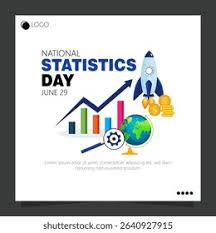
Data Collection and Organization – Learn methods of gathering, classifying, and presenting data effectively. Statistical Representation – Use charts, graphs, and tables to display and interpret data clearly. Measures of Central Tendency – Understand mean, median, and mode to analyze data sets. Probability Concepts – Study the likelihood of events and basic probability calculations. Data Analysis and Interpretation – Develop skills to analyze data and draw meaningful conclusions.
The Statistics course introduces students to the fundamental principles and methods used in the collection, analysis, interpretation, and presentation of data. It is designed to develop students’ ability to understand and apply statistical techniques in real-life situations, helping them make informed decisions based on data.
The course covers key topics such as data collection methods, classification and organization of data, and the use of tables, charts, and graphs to represent information clearly. Students learn about important statistical measures including mean, median, mode, range, and other methods used to summarize and interpret data. The syllabus also introduces probability concepts, enabling learners to understand the likelihood of events and apply probability in practical contexts.
Students develop analytical and critical thinking skills as they learn how to interpret statistical results and identify patterns or trends within data. The course also encourages the use of mathematical and graphical tools to present findings effectively.
By the end of the course, students will have gained a solid understanding of statistical methods and the ability to analyze and interpret data confidently. This knowledge provides a strong foundation for further studies in mathematics, economics, business, data science, social sciences, and other fields that rely on statistical analysis.

0 Reviews
Corporate Training